
NX40 Series BLE Module Overview
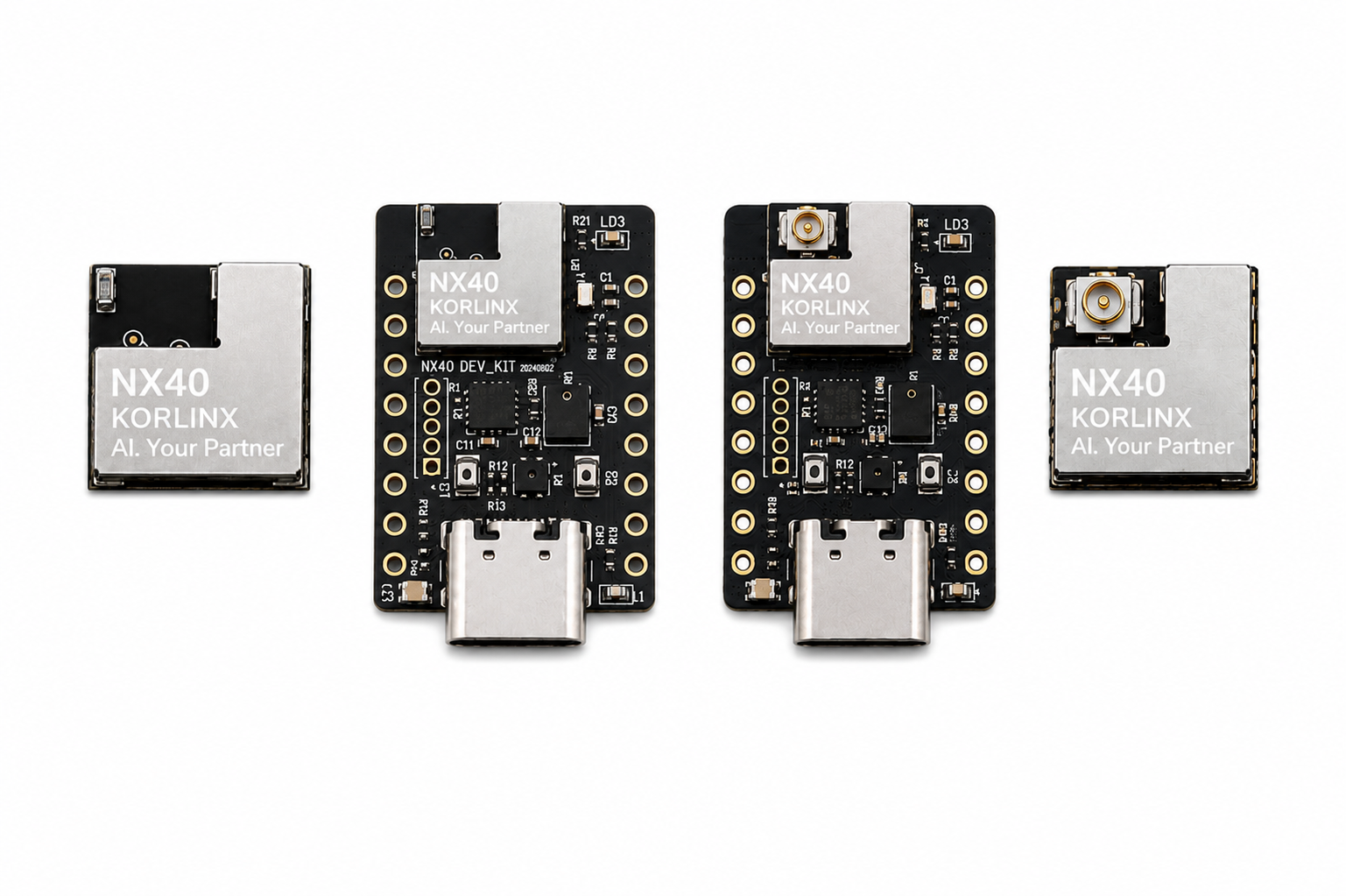
The NX40 Series is a compact wireless module series for Bluetooth Low Energy and 2.4 GHz embedded applications.
The NX40 Series is based on the nRF52840 platform and is intended for applications such as BLE sensors, beacons, wearable devices, smart home devices, industrial monitoring nodes, and short-range wireless control systems.
This page provides only a short overview. For first bring-up, hardware design, antenna design, low-power behavior, and BLE application development, continue to the dedicated pages listed below.
When to Use NX40
NX40 is suitable when your product needs:
| Requirement | Why NX40 Fits |
|---|---|
| Bluetooth Low Energy communication | Suitable for short-range wireless devices and sensors |
| 2.4 GHz multiprotocol capability | Can support BLE and other 2.4 GHz protocol use cases depending on firmware |
| Compact embedded design | Suitable for integration into custom PCB products |
| Sensor or beacon behavior | Supports periodic data transmission and advertising-based workflows |
| Host board integration | Can be used as a module inside a larger embedded system |
| Low-power IoT direction | Can be used in battery-powered products when firmware and hardware are optimized |
This page does not provide a full specification table. Detailed power, pin, RF, and production data should be placed in the dedicated hardware and integration pages after the NX40 datasheet is finalized.
NX40 Series Positioning
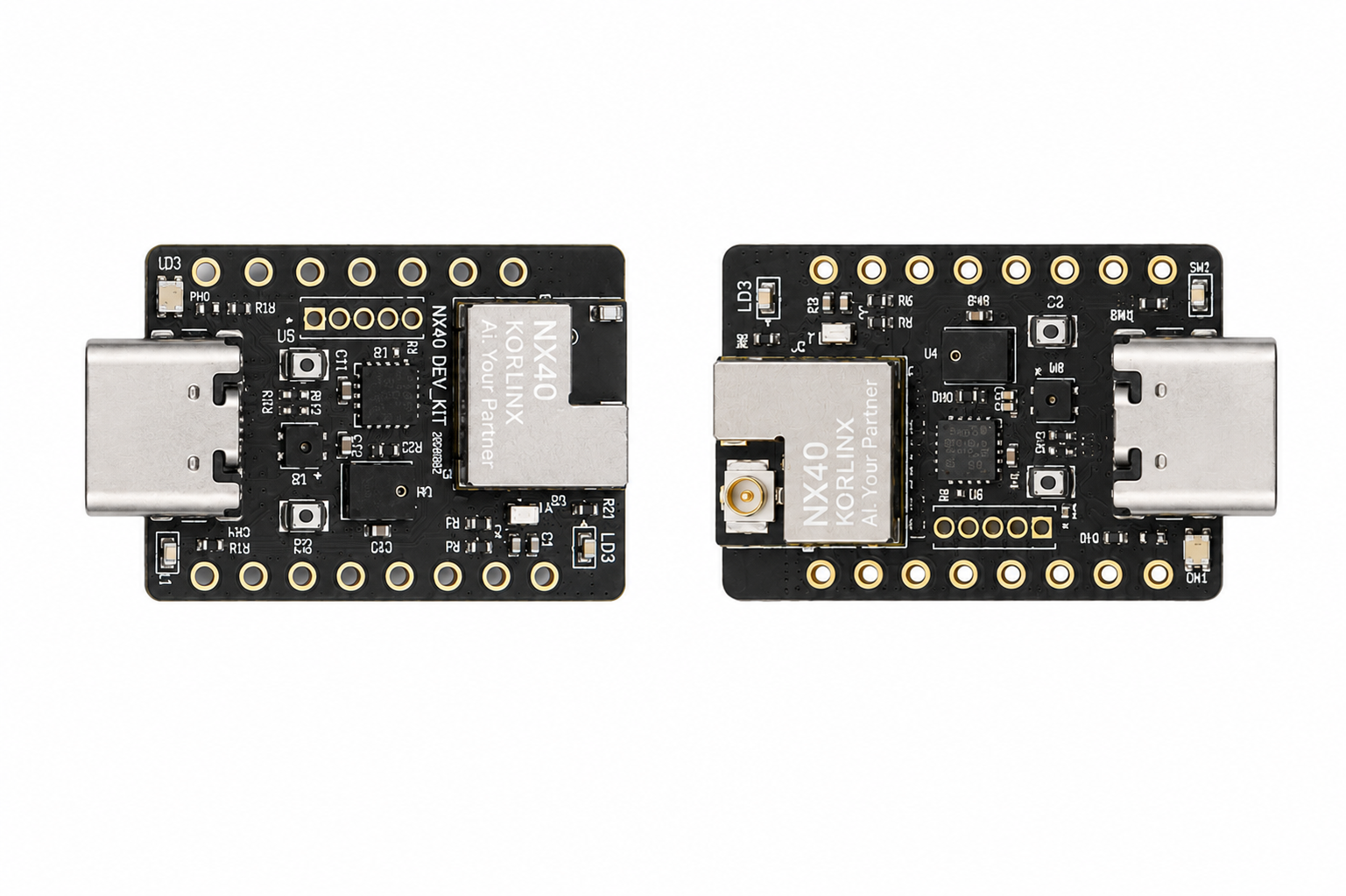
The NX40 Series follows the same model structure as the NX15 family: antenna option and external Flash option.
| Model | Antenna | Flash | Description |
|---|---|---|---|
| NX40i32 | Chip antenna | 32 Mbit SPI Flash | Chip antenna variant with external Flash |
| NX40E32 | u.FL external antenna | 32 Mbit SPI Flash | External antenna variant with external Flash |
| NX40i00 | Chip antenna | None | Chip antenna variant without external Flash |
| NX40E00 | u.FL external antenna | None | External antenna variant without external Flash |
Confirm the final model list, mechanical data, pin map, and RF layout details against the official NX40 datasheet before production release.
Documentation Flow
Use the NX40 documentation in this order:
| Step | Page | Purpose |
|---|---|---|
| 1 | Quick Start | Bring up NX40 on a development board or custom host board |
| 2 | Hardware Design | Review power, debug, GPIO, reset, and board-level design |
| 3 | Antenna Design | Review chip antenna or u.FL external antenna requirements |
| 4 | Low Power Guide | Optimize advertising, connection timing, sleep behavior, and current consumption |
| 5 | BLE Application Guide | Build advertising, connection-based, GATT, or gateway-based BLE applications |
| 6 | 802.15.4 / Thread Guide | Plan 802.15.4 or Thread-based application behavior when required |
| 7 | FAQ | Check common bring-up, BLE, antenna, and integration issues |
Main Documentation Areas
| Area | What It Covers |
|---|---|
| Quick Start | First hardware and firmware bring-up |
| Hardware Design | Power, ground, debug, reset, GPIO, and interface planning |
| Antenna Design | Chip antenna placement, u.FL path, and RF validation notes |
| Low Power Guide | Sleep behavior, radio timing, and current measurement |
| BLE Application Guide | Advertising, connection, GATT, gateway flow, and application behavior |
| 802.15.4 / Thread Guide | Directional guide for non-BLE 2.4 GHz workflows |
| Module Integration | Custom PCB integration, model selection, pad/pin layout, and production handling |
NX40 vs NX15 Documentation Pattern
NX40 follows the same documentation structure as NX15, but the technical content must remain NX40-specific.
| Reused from NX15 documentation | Must be NX40-specific |
|---|---|
| Page flow | SoC/platform |
| Page structure | Pin map |
| Image suggestion style | Power design |
| Overview / Quick Start pattern | Antenna layout |
| No-duplicate-content principle | Current consumption |
| Related page navigation | Mechanical and production data |
Next Step
Start with the Quick Start guide when you are preparing a board, checking the programming path, or verifying the first BLE behavior.